Kayak vs Canoe: 2 Awesome Boats but Which is Better?
2018-12-24
TL;DR
Kayak vs Canoe Review: Kayaks offer speed and maneuverability while canoes provide stability and cargo space. Choose based on your skill level, intended water activities, and personal needs.
Kayak vs canoe… Which is the better boat?
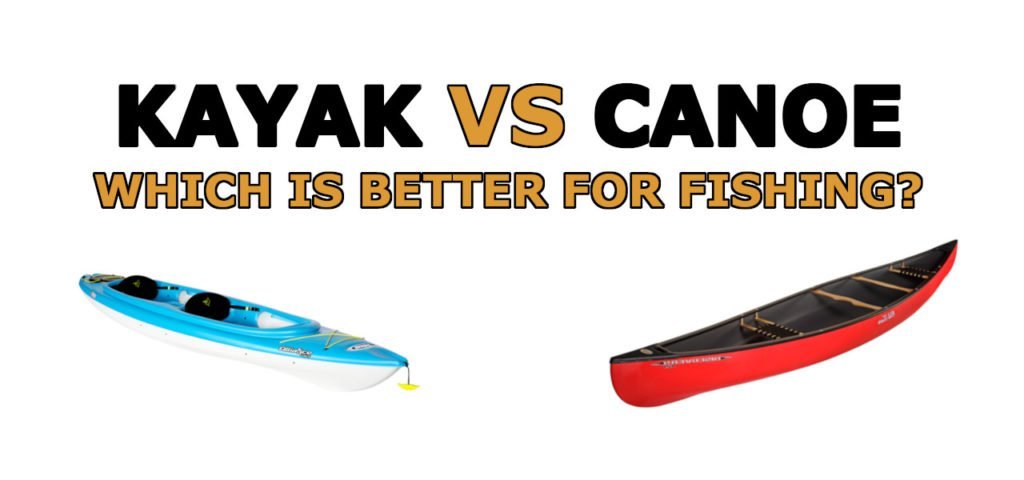
Kayak vs Canoe
Kayak vs Canoe: Growing Paddlesport Popularity
Both kayaking and canoeing continue to experience significant growth in the United States. Nearly 20 million Americans went kayaking at least once in 2023, with recreational kayaking being the most popular form, attracting close to 15 million enthusiasts.
The American Canoe Association (ACA) supports the expanding paddlesports community through its network of 6,955 certified instructors and educational programs across 16 different paddling disciplines. With over 15,000 members and 15,000+ event participants annually, the ACA demonstrates the robust and growing interest in both kayaking and canoeing activities.
Whether you prefer the speed and maneuverability of a kayak or the stability and cargo capacity of a canoe, both watercraft offer excellent opportunities for outdoor recreation, with each style having distinct advantages depending on your intended use, skill level, and personal preferences.
But does this mean that kayaking is better than canoeing?
Let’s try to give an answer to this question by comparing the main instruments in these activities - the kayak and the canoe.
Kayak vs Canoe: Key Design Differences
Kayaks are typically:
- Smaller and narrower than canoes
- More maneuverable due to their narrow profile
- Less stable with higher risk of capsizing
- Easier to store and transport
- Perfect for navigating confined areas and narrow rivers
Canoes are typically:
- Wider and more spacious
- More stable (you can even stand in most canoes)
- Harder to capsize
- More challenging to store due to larger size
- Available in much larger sizes (up to 20+ feet long and 40+ inches wide)
Speed Myth: Contrary to popular belief, a kayak is not inherently faster than a canoe of the same length. Hull speed depends primarily on watercraft length. The key difference is that kayaks often accelerate faster due to their lighter weight.
Size Considerations: Kayak vs Canoe
Kayaks
Kayaks tend to be noticeably smaller and narrower than canoes. Because of this, they have several traits not typically present in canoes.
First of all, thanks to their narrowness, kayaks tend to be more maneuverable. On the other hand, narrowness also makes them less stable, which is one of the things that would prevent you from standing on a kayak.
Besides, the risk of capsizing is higher in kayaks.
Secondly, due to their small size, kayaks are generally easier to store. And besides, they are easier to use in confined areas, narrow rivers, etc.
Now, it should be mentioned that not every kayak is going to be highly maneuverable and unstable. Wide and long kayaks are less maneuverable, quicker, and more stable than their compact counterparts. So it really depends on the kayak you are looking at.
There is a rather common misconception that kayaks are quicker than canoes due to their lightness, narrowness, or whatnot. In reality, the maximum achievable speed of any vessel will depend on its length.
So a kayak and a canoe with the same length should have around the same hull speed. What may differ though between them is their acceleration. A lighter vessel will most likely reach its maximum speed quicker because it is easier to propel.
Canoes
In terms of size, things tend to be the other way around with canoes. They are wider and less compact.
Needless to say, this means that a typical canoe will mirror a kayak in terms of performance. A canoe will be more stable and will even allow standing. On the other hand, storing a canoe isn’t the easiest of tasks.
In addition, canoes can get much longer and wider than kayaks. Kayaks usually don’t go over 14 feet long and about 34 inches wide, while canoes can be over 20 feet long and over 40 inches wide.
So if you are looking for the quickest and the most stable vessel, a canoe would be the better choice. But it would be much heavier, larger, and less maneuverable than a kayak.
Seating Position: Kayak vs Canoe
Kayak Seating
- Seat positioned directly on the hull bottom
- Legs extended forward taking up interior space
- Two main types:
- Sit-on-top kayaks: Entire body exposed, easier movement, better for warm weather
- Sit-in kayaks: Legs covered by hull, drier experience, better for cold weather
Canoe Seating
- Elevated bench seating
- Legs bent down, preserving interior space
- Storage available beneath seats
- Higher sides keep water out
- Greater freedom of movement than sit-in kayaks
Kayaks
In kayaks, the seat is situated right on the hull, so you are pretty much sitting on the bottom of the hull with your legs spread in front of you.
There is an obvious downside to such a seating position: your legs occupy some of the hull area, leaving less free space for your gear.
There are two types of kayaks based on the seating - sit-on-top and sit-in. We’ve described the pros and cons of each type in our kayak buying guide, so you could check it out.
To put it short, in a sit-on-top kayak, your entire body is exposed. In a sit-in kayak, your legs are covered by the hull, and only your torso is out in the open.
The sides of sit-on-top kayaks are pretty low, so getting wet in such a kayak is really easy. Because of that, these kayaks are usually used in warm weather. However, it is rather easy to move around in a sit-on-top kayak, which is why they are preferred for fishing.
Things are the other way around in a sit-in kayak. It isn’t as easy to get wet in them, so they are more suitable for cold weather. But they limit freedom of movement quite a lot.
Canoes
In a canoe, you are sitting on an elevated bench rather than directly on the hull. Because of this, your legs aren’t straight out in front of you. Rather, you are seated like on a regular bench.
Thanks to this, your legs don’t occupy precious interior space. And there is also some additional space beneath the sitting bench.
Because the sides of a canoe are rather high up the water, the risk of water getting into the hull is pretty low. Thus, a canoe is a better choice for paddling in cold water than a sit-on-top kayak.
At the same time, a canoe is more comfortable than a sit-in kayak because it doesn’t limit freedom of movement as much.
Storage Capacity: Kayak vs Canoe
Kayaks
- Limited storage space
- Weight capacity typically up to 700 pounds
- Accommodate 1-3 paddlers maximum
- Feature sealed, watertight storage compartments to keep gear dry
Canoes
- Significantly more storage space
- Weight capacity often exceeding 1,000 pounds
- Room for 2 paddlers plus passengers (children or pets)
- Lack sealed compartments (gear more vulnerable to water)
Kayaks are smaller, so they obviously have much less storage area in them. Their weight capacity usually doesn’t go over 700 pounds. In addition, a kayak can accommodate 2-3 paddlers at most, depending on the size.
Canoes have much more storage space in them. Their weight capacity can go well beyond 1000 pounds. And they also allow you to take kids or a dog on board. You can have, for example, 2 paddlers in a canoe and 1-2 passengers.
However, the huge plus of kayaks is that they can have sealed storage compartments that can keep all your gear dry, unless you capsize.
Canoes don’t have such a feature. So if you have water-sensitive gear with you, you’ll need to be careful not to allow any water to get into the canoe.
Paddling Technique and Equipment
Kayak Paddles
- Double-bladed (blade on each end)
- More efficient paddling motion
- Heavier than canoe paddles
- Generally easier technique to learn
Canoe Paddles
- Single-bladed
- Lighter weight
- Require more skill to master paddling technique
Kayaks are used with specialty kayaking paddles. These paddles have two blades on them - one on each end - unlike canoe paddles that have only one.
Generally, it is considered that kayaking paddles are more efficient. If you use the momentum of the blade that is ascending from the water, you can save a lot of energy on propelling the vessel.
Besides, learning kayak paddling is usually easier than canoeing.
However, kayak paddles are heavier than canoe paddles, so you’ll need to have the physical capacity to use them.
Weight and Transportation
Kayaks
- Significantly lighter
- Easier to transport and carry
- Many models can be transported by a single person
Canoes
- Substantially heavier
- Typically require two people to transport
- More challenging to load onto vehicles
Kayaks are smaller, so they are much, much lighter than canoes. This is the thing that makes kayaks very easy to carry. Canoes are substantially heavier and typically require two people to transport. But if you don’t care about transporting too much, then the weight of a canoe won’t be a downside for you.
Price Comparison: Kayak vs Canoe
Kayaks
- More affordable options available (starting around $400)
- High-end models typically max out around $1,500-$1,700
Canoes
- Generally more expensive (starting around $1,000)
- Premium models can cost up to $3,000
- Price reflects larger size and capacity
Canoes tend to be more expensive than kayaks. High-end canoes can cost as much as $3000, while kayaks usually don’t go higher than $1500-1700.
In fact, you can get kayaks rather cheap - $400 and even less. At the same time, canoes mostly cost around $1000. Maybe this is the main reason for kayaking’s insane popularity in the United States.
We can’t say that canoes are overpriced though. They have their own unique features which kayaks don’t have. So for a paddler who needs those features, a canoe wouldn’t be a waste of money.
Kayak vs Canoe: Pros and Cons Summary
To round all this info up, let’s now see the pros and cons of both kayaks and canoes.
Kayaks
Kayak Advantages & Pros
- Kayaks are more lightweight and easier to
transport. - Kayaks are more compact and easier to store and
use in confined areas. - Kayaks are easier to accelerate due to their
lightness and because their paddles are more efficient. - Kayaks can be more maneuverable.
- Thanks to sealed hatches, gear can be kept dry
in kayaks. - Kayaks tend to be cheaper.
Kayak Disadvantages & Cons
- It is very easy to get wet in a kayak.
- Kayak paddles are heavier.
- Kayaks don’t have much storage capacity.
- Kayaks don’t allow as much freedom of movement.
Canoes
Canoe Advantages & Pros
- Canoes have much higher storage capacity.
- Canoes are more stable than kayaks. You can
stand in them, and capsizing a canoe is more difficult. - Canoes allow great freedom of movement.
- It isn’t easy to get wet in a canoe.
- You can bring your kids or dog for a canoe trip.
Canoe Disadvantages & Cons
- Canoes are heavy and big, so they are difficult
to transport and store. - Canoe paddles are less efficient.
- Canoes don’t have watertight storage
compartments. - Canoes are more expensive.
Kayak vs Canoe - which is better?
The kayak vs canoe debate doesn’t have a universal answer. Your choice should depend on:
- Trip duration: Canoes excel for longer journeys requiring more gear
- Water conditions: Kayaks navigate tight spaces better; canoes offer more stability
- Weather: Sit-in kayaks or canoes for cold weather; sit-on-top kayaks for warm weather
- Passengers: Canoes accommodate more people and pets
- Transportation: Consider how you’ll move and store your watercraft
- Budget: Kayaks generally offer more affordable entry points
Both kayaks and canoes have their place in the paddling world. Many enthusiasts eventually own both to enjoy different water experiences.
Both are highly situational. You wouldn’t want to use a kayak on a long trip where plenty of gear may be necessary. And on small water bodies, a canoe may be too sluggish for convenient paddling.
And besides, canoes and kayaks can be very different, so the “rules” we described may be applicable to a much less extent.
The number of paddling scenarios is truly huge, so we cannot realistically give recommendations for each one. Try to understand the logic behind each point, and, using that knowledge, pick the vessel that is better for your paddling tasks!
And yeah, if you decided to get a kayak, then check out our buying guide.
If you are more interested in fishing, check out our separate post on kayak vs canoe fishing.
Verdict
Kayak vs Canoe: 2 Awesome Boats but Which is Better? is worth your money if it matches the use case above - see the full breakdown for who should (and shouldn't) buy.