Pedal vs Paddle Fishing Kayak: Which One Should You Buy?
By Jimmy Hurff ·
TL;DR
Pick a pedal kayak for wind, current, and hands-free fishing. Pick a paddle kayak for skinny water, a lighter boat, and about a third of the price.
Once you decide you want a fishing kayak, the next big question is how you move it. Do you paddle it, or pedal it? A pedal drive frees up your hands. A paddle kayak is lighter, simpler, and a lot cheaper.
Both catch fish. Here is how to pick.
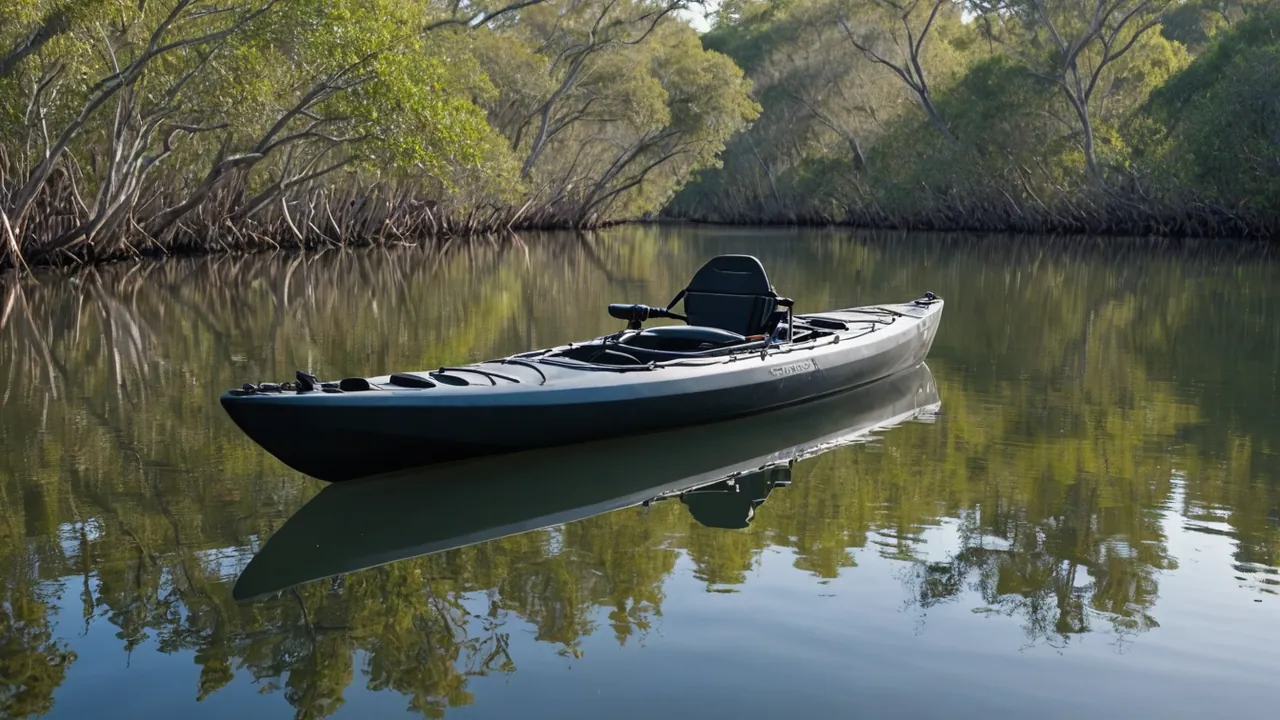
What is the difference?
A paddle kayak moves when you paddle it. Simple. When you stop to cast, the paddle goes in your lap or a paddle holder, and the boat drifts.
A pedal kayak has a drive unit that drops through a hole in the hull. You push pedals with your feet, like a bike, and a prop or fins under the boat push you along. You steer with a rudder handle. Your hands stay free to cast, fight a fish, or work a fish finder.
Pedal vs paddle at a glance
| Pedal kayak | Paddle kayak | |
|---|---|---|
| Hands free while moving | Yes | No |
| Holding position in wind or current | Easier, a few pedal strokes | Harder, put the rod down and paddle |
| Weight | Heavier (drive plus a bigger hull) | Lighter |
| Price | Much higher | Much lower |
| Very shallow water | Drive has to come up | No problem |
| Maintenance | Drive, prop, and rudder to care for | Almost none |
| Moving parts that can break | Yes | Just the paddle |
| Backup if something fails | Still carry a paddle | The paddle is the backup |
Same boat, two ways: Old Town Sportsman 106 vs Sportsman PDL 106
The cleanest way I know to show the trade-off is to put two kayaks from the same family side by side. Old Town sells the Sportsman 106 as a paddle kayak and the Sportsman PDL 106 as a pedal kayak. Both are 10 ft 6 in sit-on-tops with Old Town's DoubleU hull. All specs and prices below are from Old Town's own product pages for the Sportsman 106 and the Sportsman PDL 106, checked November 25, 2026.
| Sportsman 106 (paddle) | Sportsman PDL 106 (pedal) | |
|---|---|---|
| Propulsion | Paddle | PDL pedal drive |
| Length | 10 ft 6 in | 10 ft 6 in |
| Width | 34.5 in | 36 in |
| Assembled boat weight | 77 lb | 107 lb |
| Pedal console weight | None | 18 lb |
| Usable weight capacity | 363 lb | 343 lb |
| Total weight capacity | 440 lb | 450 lb |
| Rudder | None | Included |
| Rod holders | 1 forward, 2 rear, flush mount | 1 forward, 2 rear, flush mount |
| Accessory tracks | Two 18 in tracks | Two 18 in tracks |
| Drive warranty | None (no drive) | 5 years on the PDL Drive |
| Sale price on Nov 25, 2026 | $799.99 (list $999.99) | $2,239.99 (list $2,799.99) |
Look at the three numbers that matter most:
- Price. On the day I checked, the pedal version cost $1,440 more. That is the whole cost of the paddle boat plus a good paddle, PFD, and crate, with money left over.
- Weight. The pedal boat is 30 lb heavier assembled. Old Town says you can lift the drive out (it is 18 lb on its own), which helps when you load it, but it is still more boat to move.
- Rudder. The pedal boat comes with a rudder so you can steer hands free. The paddle boat does not have one.
If you want to buy either, here is the Old Town Sportsman PDL 106 on Amazon. I could not find the paddle Sportsman 106 listed on Amazon, so this is a search for the Old Town Sportsman 106, or you can buy it from Old Town or a local dealer.
Who should get a pedal kayak?
A pedal kayak makes sense if most of these sound like you:
- You fish wind, current, or open water. Holding a spot with a few pedal strokes while you keep casting is the big reason people pay for a pedal drive.
- You troll. Pedaling while two rods sit in the holders is a lot easier than paddling and watching rods at the same time.
- You cover a lot of water. Your legs do the work, so long days are easier on your shoulders.
- You want to fight fish hands free. You can steer and keep the boat lined up while you hold the rod.
The trade-offs are cost, weight, and a drive you have to take care of. If you are looking at a top-end pedal boat, our Hobie Mirage Pro Angler 14 review covers one of the big names.
Who should get a paddle kayak?
A paddle kayak makes sense if most of these sound like you:
- You fish skinny water. Flats, creeks, and the backcountry. You can float over water a pedal drive cannot work in.
- You load and carry it by yourself. A lighter boat is easier to get on a roof rack or a cart.
- You want to spend less. The money you save goes a long way on the rest of your gear.
- You like simple. No drive, no prop, no rudder cables. Rinse it and go.
The trade-off is that you put the rod down to move or hold position. An anchor trolley, stake-out pole, or drift sock takes care of a lot of that. And a paddle built for fishing helps. Our kayak paddle buying guide and the Bending Branches Angler Pro review are good places to start.
How shallow can a pedal kayak go?
This is the one that catches people. Old Town says the Sportsman PDL 106 can float in about 6 inches of water with the drive in the up position, but when the drive is down and in use, the minimum recommended depth is 21 inches.
So in a lot of Florida backcountry water, you will be pulling the drive up and paddling or poling anyway. If most of your fishing is that shallow, a paddle kayak is the simpler choice.
Do you still need a paddle with a pedal kayak?
Yes. Always carry one. You need it for water too shallow for the drive, for backing off a launch, and in case the drive, prop, or rudder has a problem. A two-piece paddle stows easily.
WARNING: A pedal drive does not replace a life jacket or a plan to get home. Wear your PFD, carry a paddle, and know how you will get back if the drive quits. Our guide to choosing a PFD covers fit and type.
What about getting it to the water?
Weight matters every time you load up. A 107 lb kayak is a two-person lift for most people, or a job for a trailer, truck bed, or cart. Old Town says you can remove both the PDL Drive and the seat for transport, which takes off 18 lb and 6 lb.
If you are going pedal, plan on a cart. Our Wheeleez balloon tire cart review covers one made for heavy kayaks, and our how to transport a kayak guide covers racks and trucks.
How do I decide?
Ask yourself three things:
- Where do I fish most? Open water, wind, or current, lean pedal. Skinny flats and creeks, lean paddle.
- Can I load it by myself? If not, a lighter paddle kayak or a cart and trailer plan.
- What is my budget for the whole setup? Not just the boat. A PFD, paddle, crate, and anchor add up fast.
If you can, rent or demo both before you buy. For the rest of the fishing kayak decision, see our best fishing kayaks guide and sit-on-top vs sit-inside guide. Once you have the boat, our YakAttack BlackPak Pro review covers the crate a lot of kayak anglers start with. If you need a rod and reel to go with it, our sister site BestFishingStuff covers those.
FAQ
Is a pedal kayak worth the money?
It is if you fish wind, current, or open water often enough to use the hands-free part every trip. If you mostly fish shallow, calm water, a paddle kayak and the money you save on other gear is usually the better deal.
Is a pedal kayak faster than a paddle kayak?
Old Town does not publish speed numbers for these two boats, so I will not guess. The real advantage is that your legs do the work and your hands stay free, which makes long days and holding position easier.
Are pedal kayaks more stable?
Stability comes from width and hull shape more than the drive. In the Old Town pair above, the pedal Sportsman PDL 106 is 36 in wide and the paddle Sportsman 106 is 34.5 in wide. Both use the same DoubleU hull design that Old Town says is built for stand-up fishing.
Can you add a pedal drive to a paddle kayak later?
Usually only if the kayak was built for one. A pedal drive like Old Town's PDL drops into a drive well molded into the hull. Check the maker's specs before you buy a paddle kayak thinking you will upgrade it.
Disclosure: BestKayakStuff participates in the Amazon Associates program and other affiliate programs. Some links above are affiliate links. We may earn a small commission at no extra cost to you.
Verdict
Pedal vs Paddle Fishing Kayak: Which One Should You Buy? is worth your money if it matches the use case above - see the full breakdown for who should (and shouldn't) buy.
Frequently asked questions
- Is a pedal kayak worth the money?
- It is if you fish wind, current, or open water often enough to use the hands-free part every trip. If you mostly fish shallow, calm water, a paddle kayak and the money you save on other gear is usually the better deal.
- Is a pedal kayak faster than a paddle kayak?
- Old Town does not publish speed numbers for these two boats, so I will not guess. The real advantage is that your legs do the work and your hands stay free, which makes long days and holding position easier.
- Are pedal kayaks more stable?
- Stability comes from width and hull shape more than the drive. In the Old Town pair above, the pedal Sportsman PDL 106 is 36 in wide and the paddle Sportsman 106 is 34.5 in wide. Both use the same DoubleU hull design that Old Town says is built for stand-up fishing.
- Can you add a pedal drive to a paddle kayak later?
- Usually only if the kayak was built for one. A pedal drive like Old Town's PDL drops into a drive well molded into the hull. Check the maker's specs before you buy a paddle kayak thinking you will upgrade it.